Chronoscope
Design & Field Study
Chronoscope enables users to interact with their photo archive through three rotational controls on viewing directions, timeframe modes, and viewing granularity.
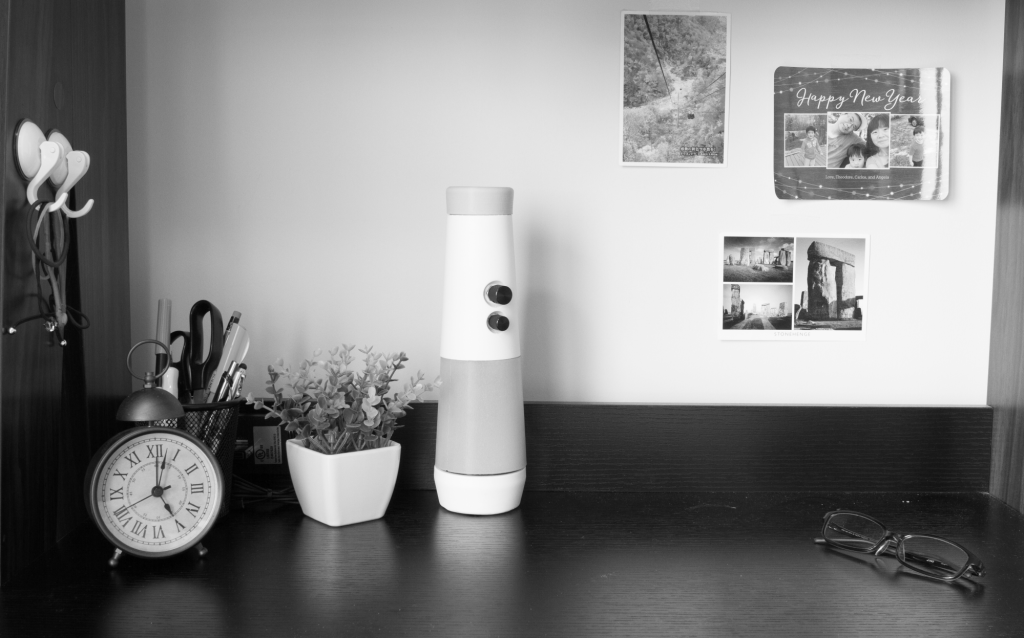
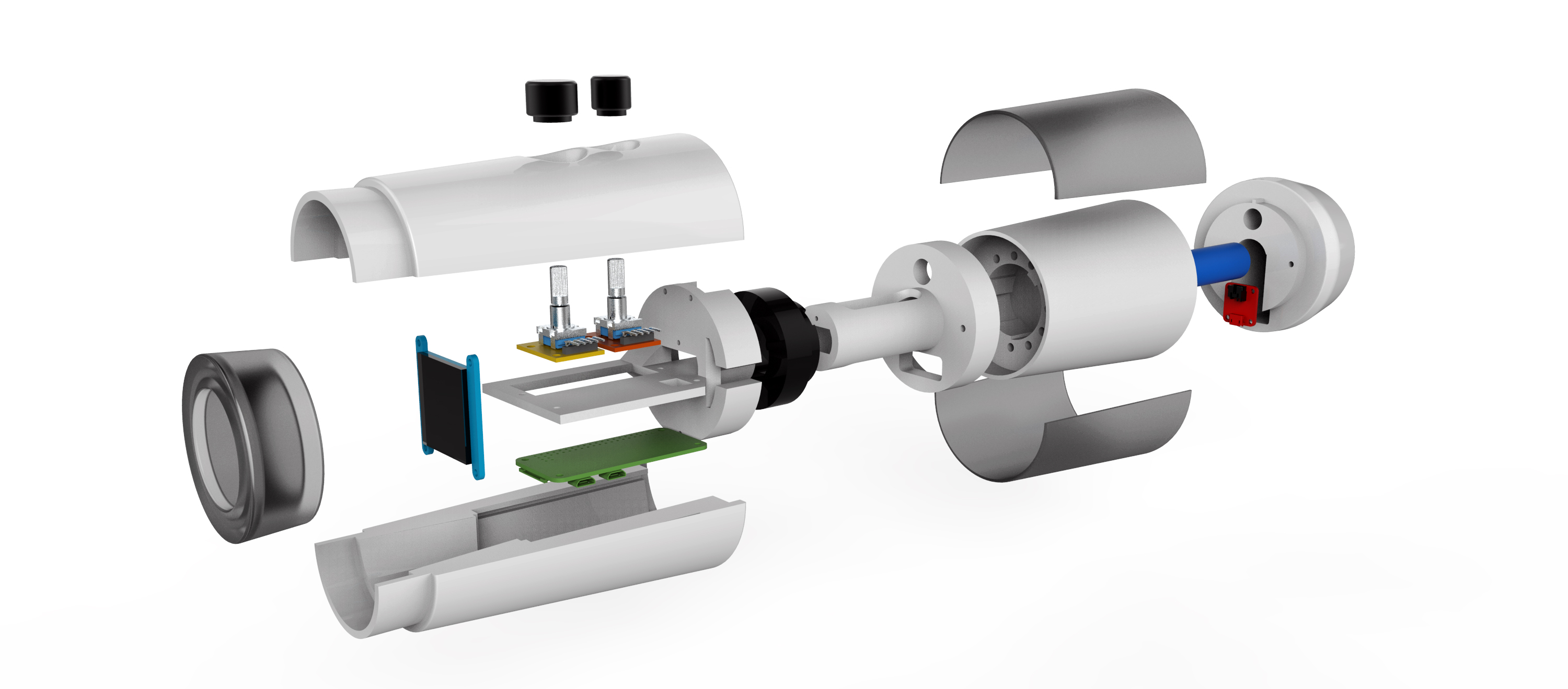
Chronoscope enables users to interact with their photo archive through three rotational controls on viewing directions, timeframe modes and viewing granularity. When peering into Chronoscope, a single photo tied to the specific time that it was taken (based on its timestamp metadata) will be visible. A rotating wheel, as the scope’s main feature, controls two directions: navigating forward and backward in time within the selected timeframe mode. Navigating in a timeframe mode occurs through a rotational movement (clockwise to move forward in time and counterclockwise to move backward). We selected physical rotation for this input as a subtle analogy to the circular shape of clocks and the temporal flow evoked by their movement. By rotating in either direction, the user sees each photo from a wide spectrum of other photos in the archive. When the user stops the rotation, the Chronoscope settles on the specific photo associated with where ‘in time’ the position is about the selected timeframe mode. When switching the bigger knob on the side of the scope, users can seamlessly toggle between different temporal organizations of their archive through three timeframe modes (linear, date, and time). When a new mode is selected, the center photo in view does not change, while the surrounding photos are replaced with ones from the new timeframe.



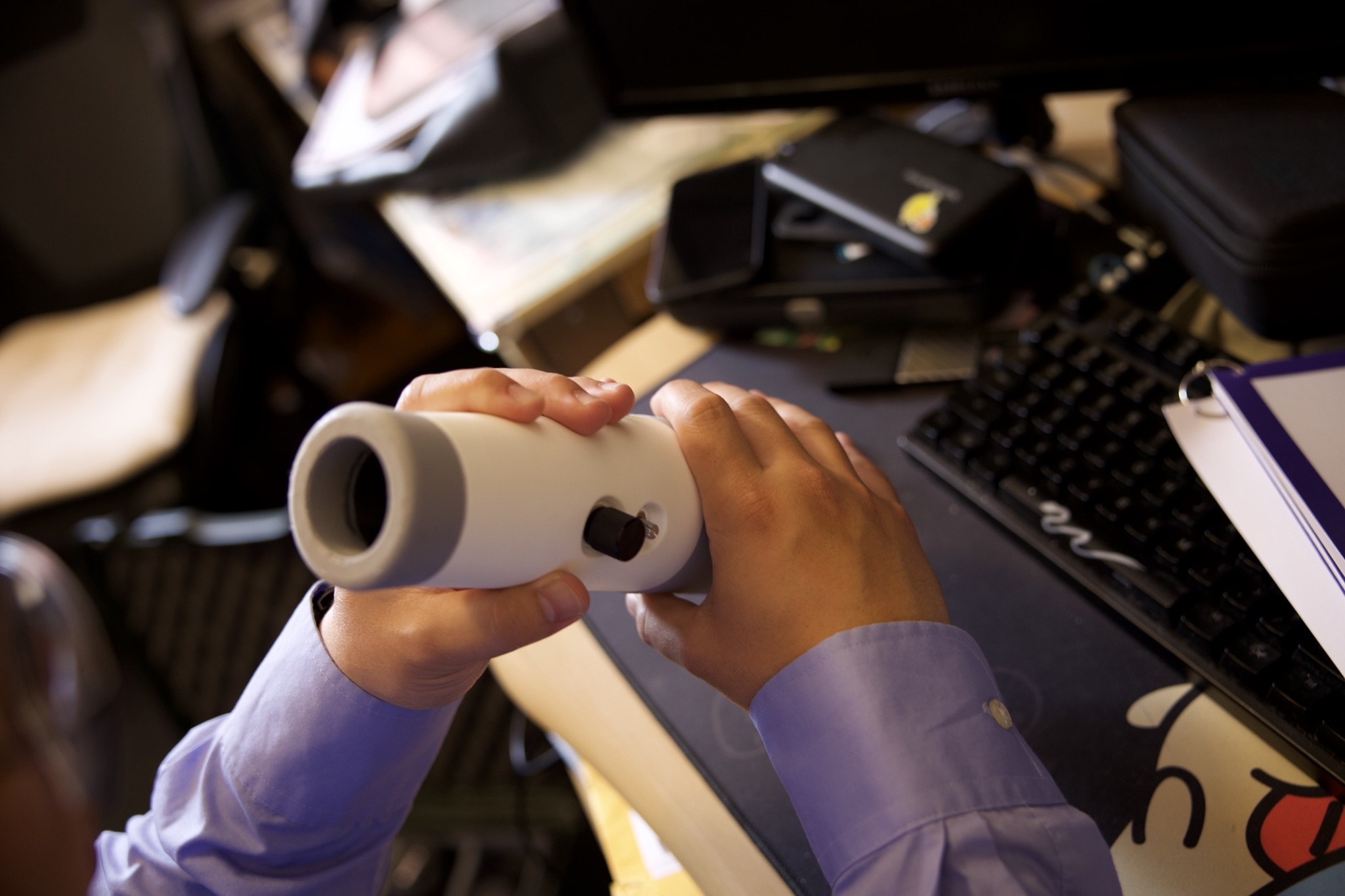
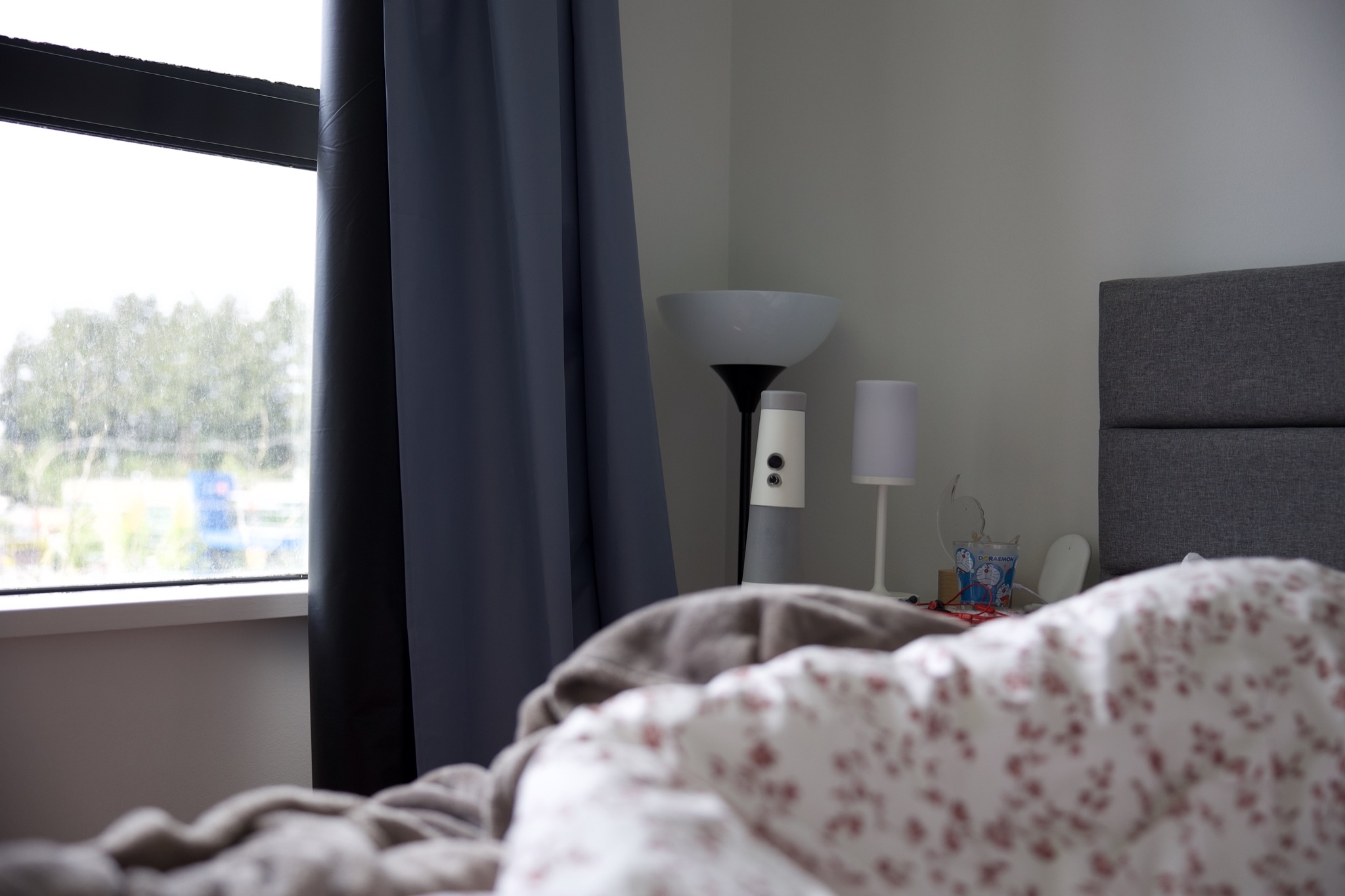

We conducted a three-month field study of Chronoscope—a design artifact that leverages the timestamp metadata attributed to each photo from when it was originally taken to open up new ways of experiencing the lifetime of digital photos in a person’s archive. Motivated by prior research on slowness and temporal design, key qualities of Chronoscope’s design include: takes time to understand; manifests change through time; modulates pacing of sequential movement through time; and generates interconnections across different forms of time to prompt refection on their presence in everyday life.
Publications
Chen, Amy Yo Sue, William Odom, Ce Zhong, Henry Lin, and Tal Amram. “Chronoscope: designing temporally diverse interactions with personal digital photo collections.” In Proceedings of the 2019 on Designing Interactive Systems Conference, pp. 799-812. 2019.
Chen, Amy Yo Sue, William Odom, Ce Zhong, Henry Lin, and Tal Amram. “Chronoscope: A Near-eye Tangible Device for Interacting with Photos In and Across Time.” In Companion Publication of the 2019 on Designing Interactive Systems Conference 2019 Companion, pp. 1-4. 2019.
Chen, A Y. S., Odom, W., Neustaedter, C., Zhong, C., & Lin, H. Exploring Memory-Oriented Interactions with Digital Photos In and Across Time: A Field Study of Chronoscope. In Proceedings of the 2023 CHI Conference on Human Factors in Computing Systems.
 Kimi Ce Zhong